The Meaning Behind Japan’s No-Shoes Culture
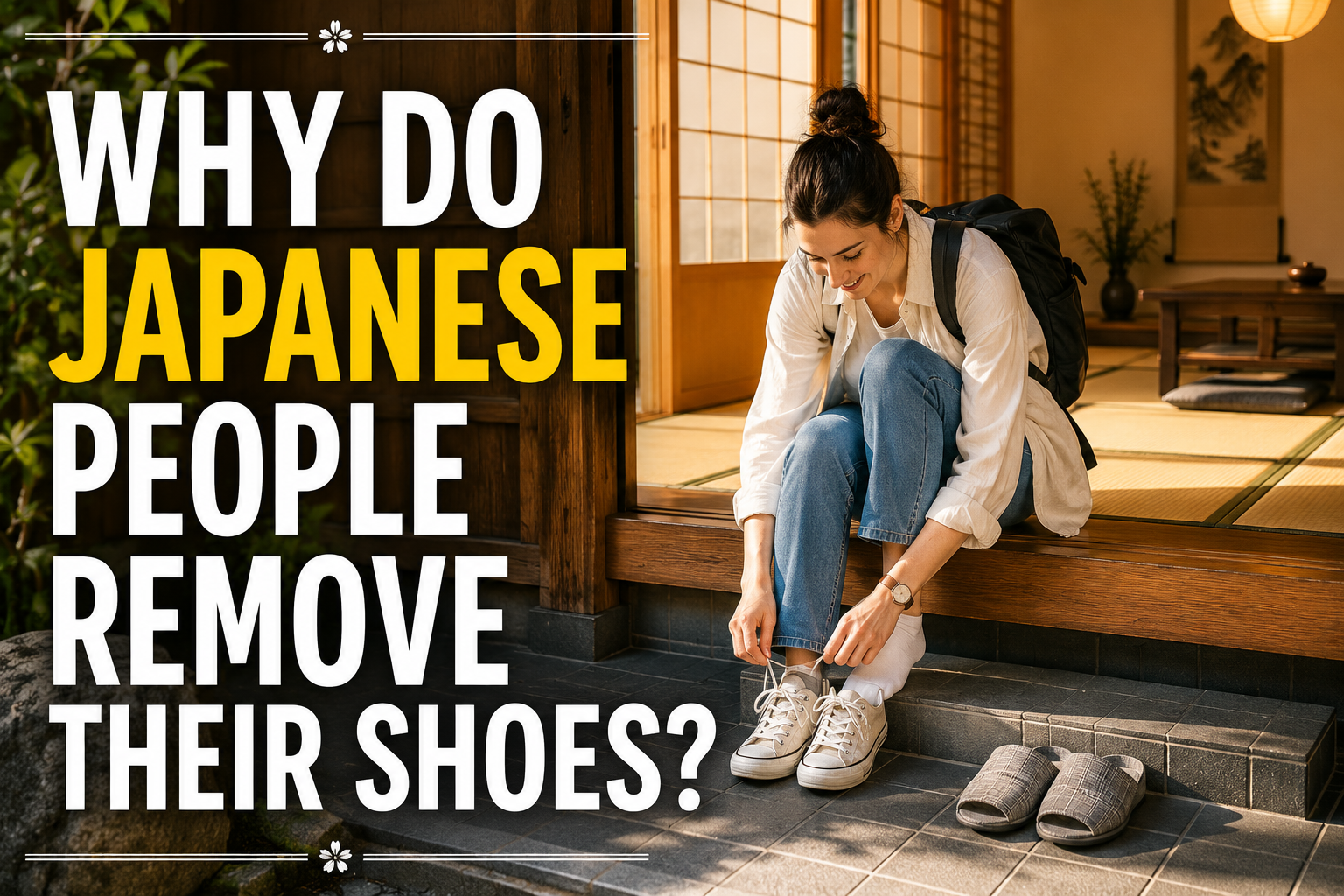
One of the first cultural differences many visitors notice in Japan is that people remove their shoes before entering certain places.
You may be asked to take off your shoes when visiting:
- Homes
- Traditional inns (ryokan)
- Temples
- Some restaurants
- Schools
- Historic buildings
For many travelers, this can feel unfamiliar or even confusing.
Why do Japanese people remove their shoes?
Is it simply a rule?
Or is there a deeper reason?
The answer is that removing shoes is not just about cleanliness—it reflects the Japanese way of thinking about home, respect, and shared spaces.
More Than a Rule—A Way of Life
In many countries, shoes stay on indoors.
In Japan, the opposite is often true.
The floor is not simply something you walk on.
It is part of the living space.
People sit on the floor.
Children play on the floor.
Families sometimes eat close to the floor.
People sleep on futons placed directly on the floor.
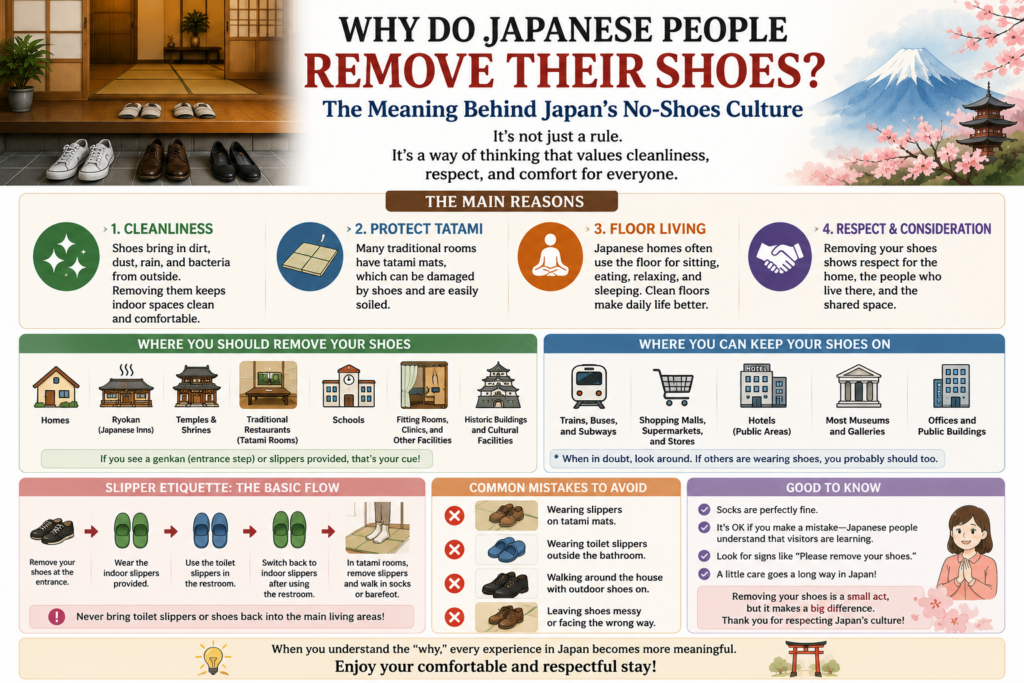
Because the floor is considered a clean living area rather than just a surface to walk across, outdoor shoes are left at the entrance.
Removing shoes is one of the easiest ways to help keep that space clean.
What Is a Genkan?
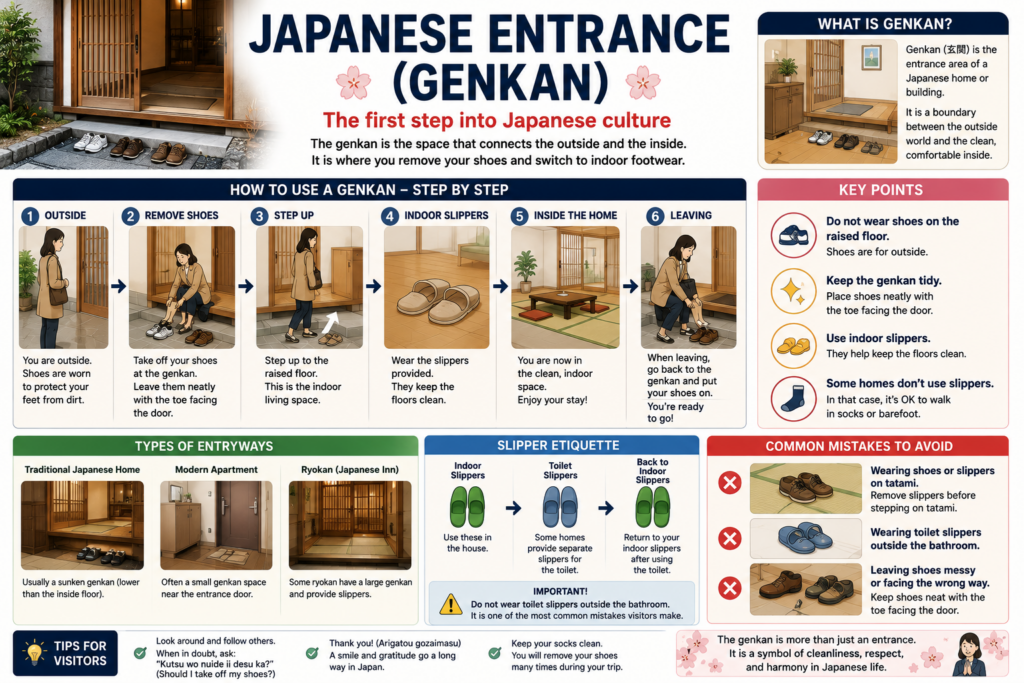
One of the most important parts of a Japanese home is the genkan (玄関).
The genkan is the entrance area where people transition from “outside” to “inside.”
Think of it as a boundary between two different worlds.
At the genkan you usually:
- Remove your shoes.
- Turn them to face the door.
- Step up into the house.
- Put on indoor slippers if provided.
This simple routine is something Japanese people learn from childhood.
You’ll find a genkan not only in homes but also in many traditional buildings.
Why Do Japanese People Remove Their Shoes?
There isn’t just one reason.
Several cultural traditions have shaped this custom over centuries.
1. Cleanliness
The most obvious reason is hygiene.
Shoes collect:
- Dirt
- Dust
- Rainwater
- Mud
- Bacteria
- Small stones
Leaving shoes at the entrance keeps the inside of the building much cleaner.
2. Tatami Floors
Traditional Japanese rooms often have tatami flooring.
Tatami is made from woven rush grass.
It is softer and more delicate than wood or tile.
Outdoor shoes can damage the surface and bring in dirt that is difficult to remove.
Keeping shoes off helps preserve the tatami.
3. Floor Living
Unlike many Western homes, Japanese homes often use the floor as part of everyday life.
People may:
- Sit on cushions
- Eat at low tables
- Stretch or relax
- Sleep on futons
- Play games with children
Removing shoes keeps these activities comfortable and hygienic.
4. Respect for Shared Spaces
Removing shoes is also a sign of consideration for others.
It shows that you respect:
- The homeowner
- The building
- The people who share the space
Rather than seeing it as an inconvenience, most Japanese people see it as a small act of courtesy.
Where Should You Remove Your Shoes?
Knowing where to remove your shoes is one of the easiest ways to avoid embarrassment.
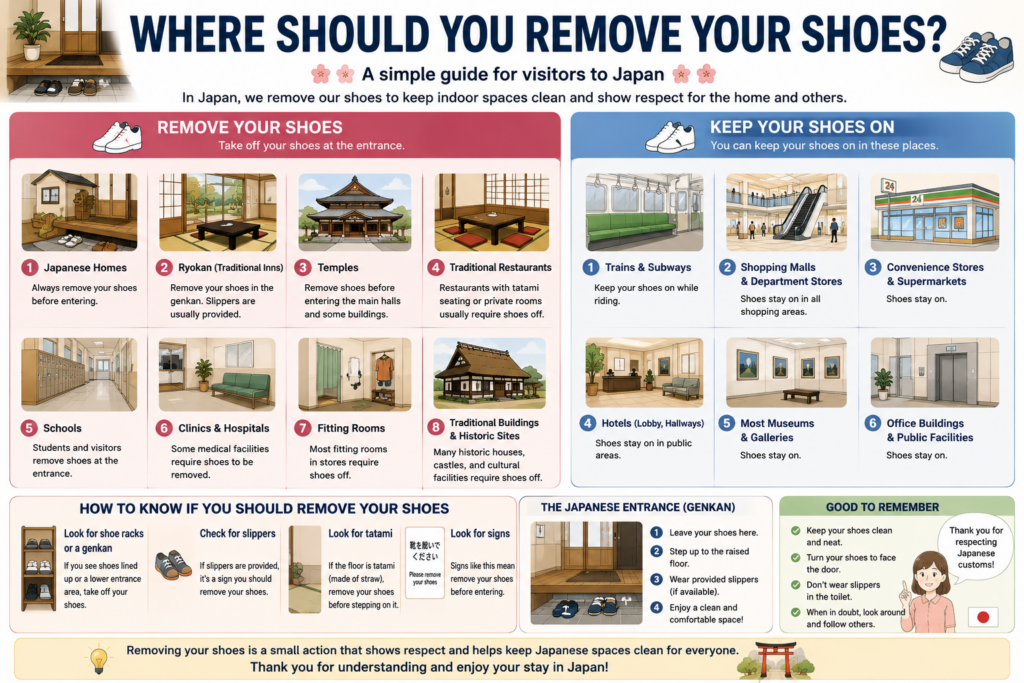
You should usually remove them when entering:
🏠 Japanese homes
♨️ Ryokan (traditional inns)
⛩ Many temples
🍣 Traditional restaurants with tatami seating
🏫 Schools
🏥 Some clinics and medical facilities
🎎 Historic houses
👘 Tea ceremony rooms
👗 Some fitting rooms
If slippers are waiting for you, that’s usually a clear sign that shoes should come off.
Where Do You Keep Your Shoes On?
Not every place requires shoe removal.
You normally keep your shoes on in:
🚆 Trains
🚇 Subways
🚌 Buses
🏨 Hotel lobbies
🛍 Shopping malls
🏪 Convenience stores
🛒 Supermarkets
🏢 Office buildings
🏛 Most museums
When in doubt, simply look around.
If everyone else is wearing shoes, you probably should too.
Understanding Indoor Slippers
Many Japanese buildings provide slippers.
These are not just for comfort.
They help keep indoor floors clean.
A typical sequence is:
- Remove outdoor shoes.
- Put on indoor slippers.
- Walk through the building.
- Change into toilet slippers if necessary.
- Return to indoor slippers afterward.
It may sound complicated, but it quickly becomes natural.
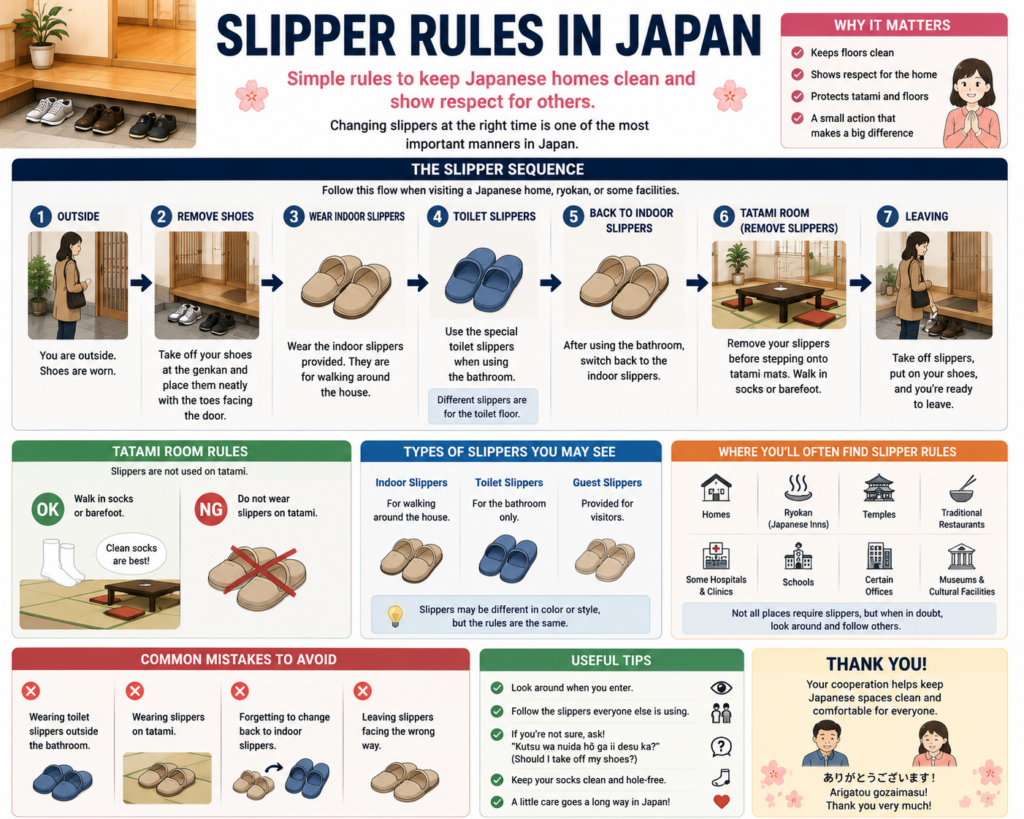
Don’t Forget the Toilet Slippers!
This surprises many visitors.
Some homes, ryokan and restaurants provide a separate pair of slippers specifically for the restroom.
Why?
Because the bathroom floor is considered a separate area.
One of the most common mistakes tourists make is walking back into the house while still wearing the toilet slippers.
If this happens, don’t worry too much.
People will usually smile and politely point it out.
Simply change back into the indoor slippers.
Never Wear Slippers on Tatami
Another common mistake involves tatami rooms.
When entering a tatami room:
- Remove your indoor slippers.
- Walk on the tatami in socks or bare feet.
Slippers can damage the woven surface and are generally not used on tatami.
If you see a step up into a tatami room, that’s often a clue that the slippers should stay outside.
What If You’re Wearing Sandals?
Sandals are perfectly acceptable.
Simply remove them at the entrance like regular shoes.
If you’re barefoot, some hosts may provide slippers.
In places where slippers are not provided, walking in clean socks or bare feet is usually acceptable.
Many travelers prefer wearing socks because they feel more comfortable when shoes come off frequently during the day.
How to Know When to Remove Your Shoes
Sometimes there is no sign.
Fortunately, there are several clues.
Look for:
- A genkan or lowered entrance area
- Shoe shelves
- Rows of shoes near the entrance
- Indoor slippers
- Tatami flooring
- Signs saying “Please remove your shoes”
If you’re still unsure, simply ask.
A polite question is:
Kutsu wa nuida hō ga ii desu ka?
(“Should I take off my shoes?”)
Or simply point to your shoes with a questioning expression.
People will understand immediately.
Common Mistakes Visitors Make
Here are the mistakes Japanese people understand—but appreciate when visitors avoid.
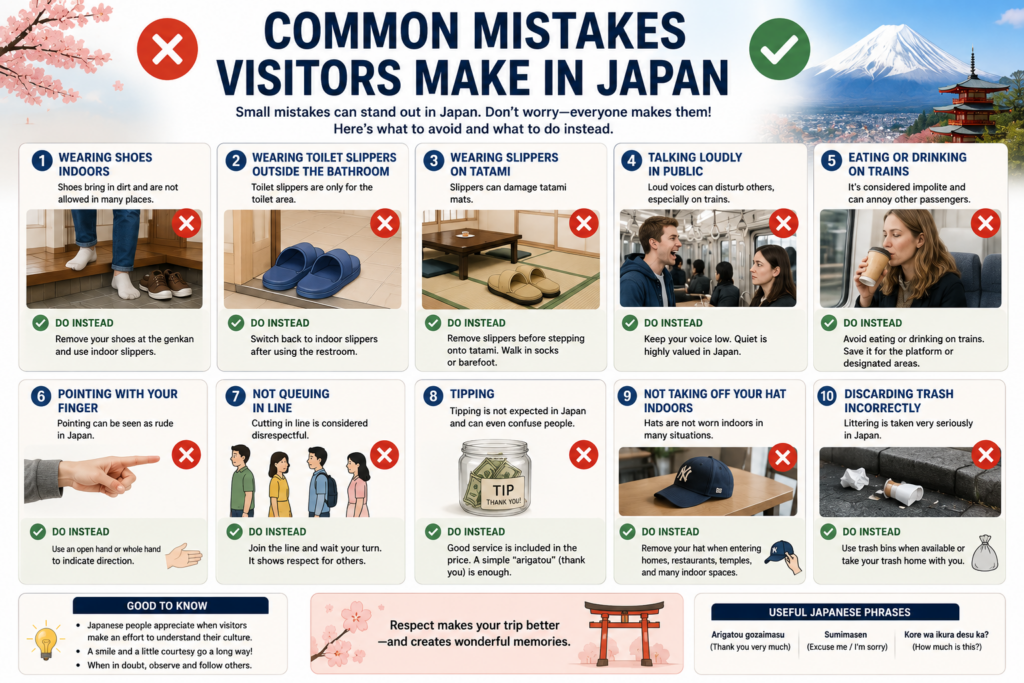
Wearing Shoes Inside
Always stop at the entrance and look around.
Wearing Toilet Slippers Everywhere
Switch back before leaving the restroom.
Wearing Slippers on Tatami
Remove them before stepping onto tatami.
Placing Shoes Randomly
If possible, leave them neatly together.
Many Japanese people turn their shoes so they face the door, making them easy to put on when leaving.
Forgetting That Some Restaurants Require Shoe Removal
If you notice everyone else removing their shoes, do the same.
Is This Tradition Changing?
Modern apartments and newer buildings sometimes have fewer traditional features than older homes.
However, removing shoes remains one of the strongest everyday customs in Japan.
Whether you visit:
- A modern apartment
- A traditional ryokan
- A countryside home
- A school
- A temple
there is a good chance you’ll be asked to remove your shoes.
It remains an important part of daily life.
Frequently Asked Questions
Why do Japanese people remove their shoes?
To keep indoor spaces clean, protect flooring such as tatami, and show respect for shared living spaces.
Should I wear socks?
Yes.
Many visitors prefer wearing socks because you’ll remove your shoes several times during your trip.
Can I stay barefoot?
Usually yes.
If slippers are provided, however, it is polite to wear them unless entering a tatami room.
Do all restaurants require shoe removal?
No.
Most restaurants do not.
Traditional restaurants with tatami seating often do.
Are slippers always provided?
Not always.
Homes, ryokan and traditional buildings often provide them.
Modern buildings may not.
What happens if I forget?
Don’t worry.
Japanese people understand that visitors are learning.
Someone will usually remind you politely.
A simple smile and apology are enough.
Final Thoughts
Removing your shoes in Japan isn’t just about keeping the floor clean.
It reflects a way of thinking that values respect, comfort and consideration for shared spaces.
Once you understand the idea behind the custom, it begins to feel natural rather than unusual.
The next time you step into a Japanese home or traditional building, you’ll know exactly what to do—and, more importantly, why it matters.