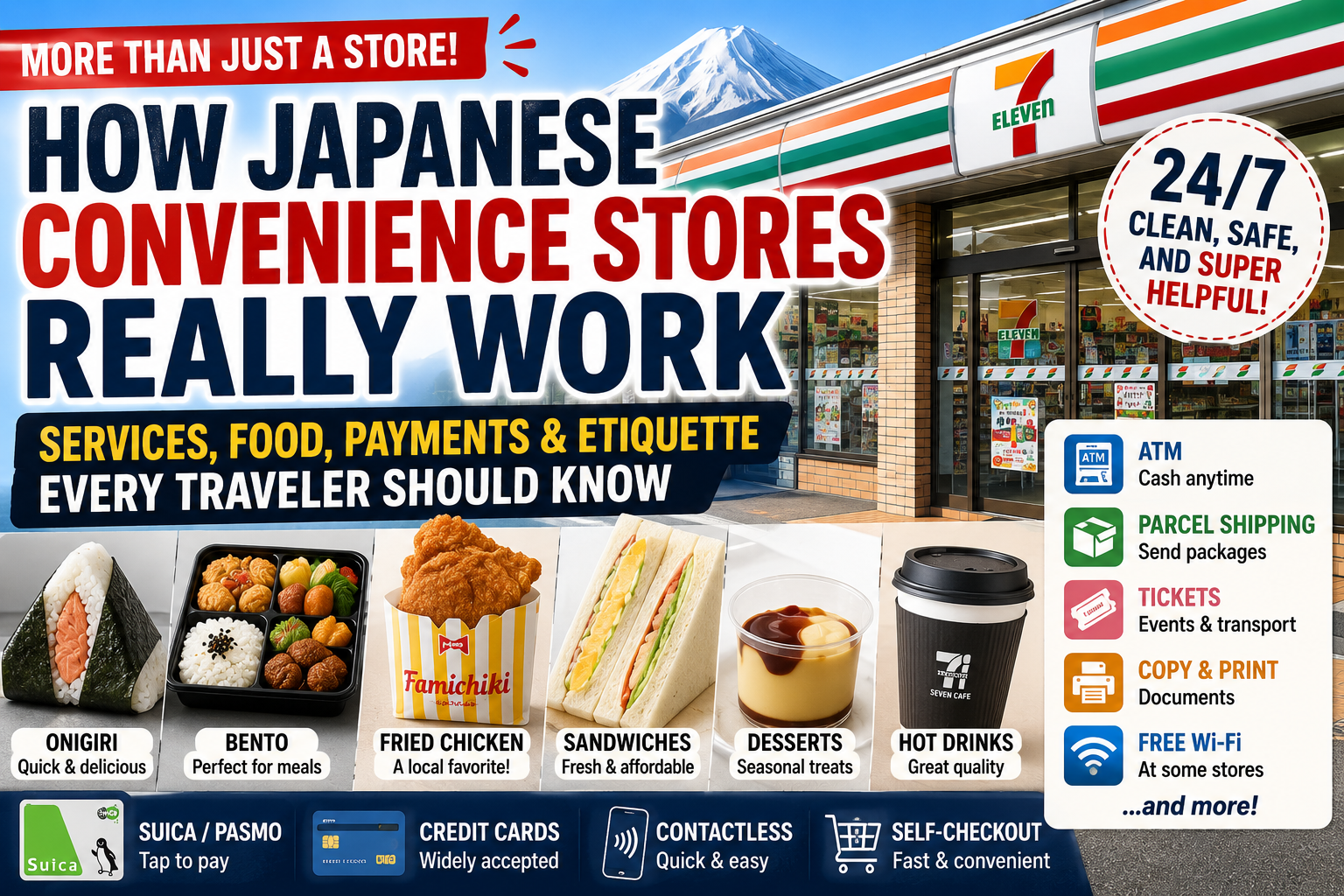
How Japanese Convenience Stores Really Work
Everything First-Time Visitors Should Know
If you’ve never visited Japan before, you may think a convenience store is simply a place to buy drinks and snacks.
In Japan, convenience stores—known locally as “konbini” (コンビニ)—are much more than that.
They are an essential part of everyday life.
Whether you need breakfast, an ATM, concert tickets, a hot meal, or even to send a package, there’s a good chance your nearest convenience store can help.
This guide explains what Japanese convenience stores are really like, what services they offer, and how to make the most of them during your trip.
What Is a Japanese Convenience Store?
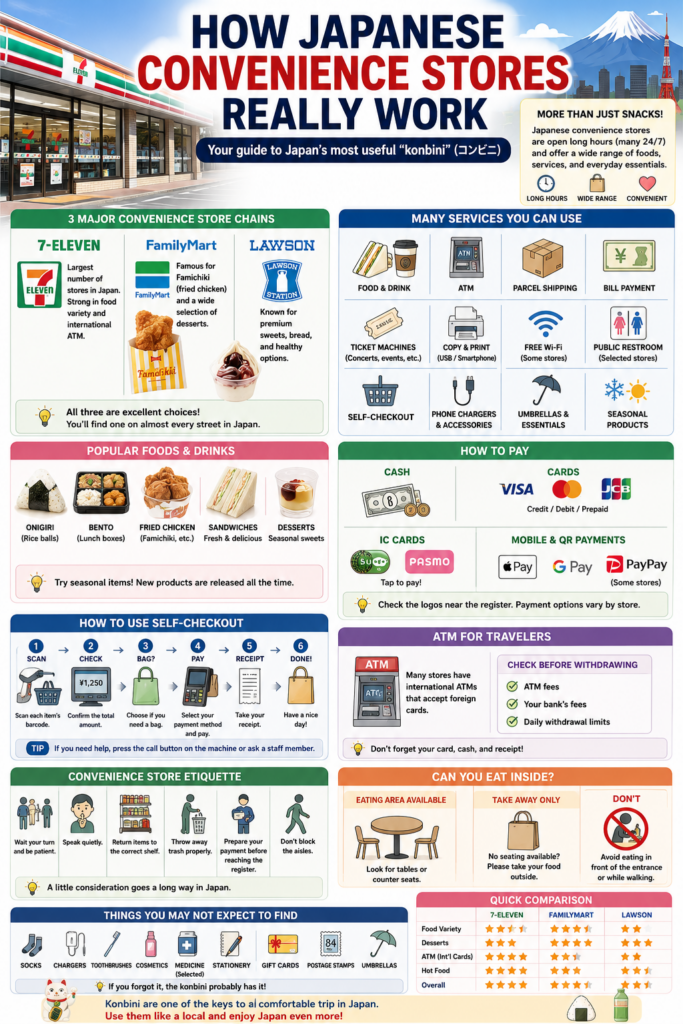
Japanese convenience stores are small retail stores that are open long hours—many operate 24 hours a day—and offer a wide variety of products and services.
The three largest chains are:
- 7-Eleven
- FamilyMart
- Lawson
Although each chain has its own products and promotions, they provide many of the same everyday services.
Unlike convenience stores in many other countries, Japanese stores are known for:
- Clean environments
- Fresh food
- Friendly staff
- Reliable quality
- Wide payment options
- Practical daily services
For many people living in Japan, visiting a convenience store is part of their daily routine.
More Than Just Snacks
One of the biggest surprises for first-time visitors is the variety of food available.
You can buy:
- Fresh sandwiches
- Rice balls (Onigiri)
- Bento lunch boxes
- Fried chicken
- Hot coffee
- Fresh desserts
- Instant noodles
- Salads
- Fruit
- Ice cream
Many stores have microwave ovens that staff will use to heat your meal.
Disposable chopsticks, spoons and napkins are usually provided free of charge.
What Services Can You Use?
Japanese convenience stores offer far more than food.
Many stores provide:
- ATM
- Parcel shipping
- Bill payment
- Ticket machines
- Copy and printing
- Free Wi-Fi (at some locations)
- Public restrooms (selected stores)
- Self-checkout
- Mobile phone charging accessories
- Umbrellas
- Toiletries
- Seasonal products
Some stores even sell neckties, shirts and underwear in case of emergencies.
Can Tourists Use the ATM?
Yes.
Many convenience stores have international ATMs.
7-Eleven and Lawson are particularly popular because their ATMs often accept foreign cards.
Before withdrawing cash, check:
- ATM fees
- Your bank’s fees
- Daily withdrawal limits
Always take your:
- Card
- Cash
- Receipt
before leaving.
How to Pay
Convenience stores usually accept:
- Cash
- Credit cards
- Debit cards
- Suica / PASMO
- Contactless cards
- Apple Pay
- Google Pay
- Selected QR payments
Payment options vary slightly by store.
Look for payment logos near the register.
Self-Checkout
Many stores now have self-checkout machines.
The basic process is:
- Scan your items.
- Confirm the total.
- Choose whether you need a bag.
- Select your payment method.
- Pay.
- Take your receipt.
For a full guide, see:
How to Use Self-Checkout Machines in Japan
Famous Convenience Store Foods
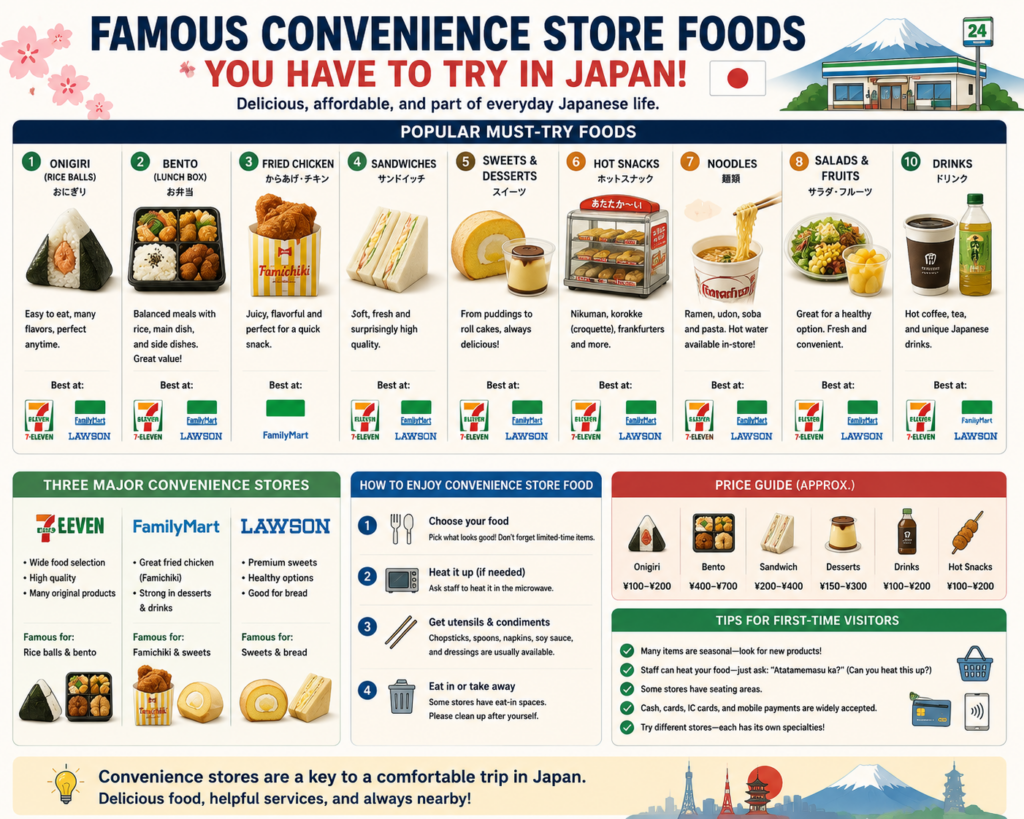
Some of the most popular items include:
Onigiri
Rice balls with fillings such as:
- Salmon
- Tuna mayonnaise
- Pickled plum
Bento
Ready-to-eat lunch boxes.
Fried Chicken
Each chain has its own famous chicken.
FamilyMart’s Famichiki is especially well known.
Egg Sandwiches
Often recommended by international visitors.
Desserts
Convenience stores frequently release seasonal sweets.
Public Restrooms
Some convenience stores have customer restrooms.
Others do not.
Availability depends on:
- Location
- Store size
- Local policy
Always ask politely before using one.
Can You Eat Inside?
Some stores have eating areas.
Others expect customers to take food away.
Look for:
- Tables
- Counter seats
- Signs
If no seating is available, avoid eating in front of the entrance.
Convenience Store Etiquette
Simple manners include:
- Wait your turn.
- Speak quietly.
- Return products to the correct shelf.
- Throw away your trash properly.
- Do not block the aisle.
- Prepare your payment before reaching the register.
Things You May Not Expect
Japanese convenience stores also sell:
- Socks
- Chargers
- Toothbrushes
- Cosmetics
- Medicine (selected stores)
- Stationery
- Gift cards
- Postage stamps
- Seasonal goods
They are designed to solve everyday problems.
Which Convenience Store Should You Choose?
| Store | Best Known For |
|---|---|
| 7-Eleven | Wide food selection, international ATM |
| FamilyMart | Famichiki, desserts |
| Lawson | Premium sweets, healthy food |
All three are excellent choices.
If one store doesn’t have what you need, another is usually only a few minutes away.
FAQ
Are Japanese convenience stores open 24 hours?
Many are, although some stores now have shorter opening hours depending on location.
Can tourists use the ATM?
Yes, many accept international cards.
Can I use a credit card?
Yes, most stores accept international credit cards.
Can I buy alcohol?
Yes.
Age verification may be required.
Do they speak English?
Some staff do, but many interactions are simple enough to complete with basic English and gestures.
Final Thoughts
Japanese convenience stores are one of the easiest ways to experience everyday life in Japan.
They combine food, shopping, transportation services, banking, and practical everyday support in one place.
Once you become familiar with them, you’ll probably visit one several times a day during your trip.